






Poppers Ingredients – Pentyl, Amyl, Propyl and Butanol Overview
Pentyl, amyl, propyl and butanol – every poppers active ingredient has its own profile of intensity, duration and character. At Tom Rocket's you'll find poppers sorted by active base, so you can target the variant that suits your preferences. The overview for informed decisions.

Our Top Sellers




Which Poppers Ingredients Exist?
All poppers are based on alkyl nitrites – chemical compounds made of nitrogen, oxygen and an alkyl group. The number of carbon atoms in the alkyl group determines the boiling point and thus how quickly the aroma evaporates and what the experience feels like. The main active ingredients in the range:
Pentyl Nitrite (CAS 463-04-7)
Pentyl nitrite is the most commonly used ingredient at Tom Rocket's. It is considered well-tolerated and delivers a balanced experience. Most products in the in-house line and the Lab Quality series are pentyl-based. Examples: Tom Rocket's Pentyl Turbo Charged, Lab Quality Pentyl N-Pentanol Small/XL, Lab Quality Pentyl Butanol Small/XL, Rush Turbo Pentyl Small/XL.
Amyl Nitrite (Isoamyl Nitrite, CAS 110-46-3)
Amyl nitrite is the classic poppers ingredient, established in the scene for decades. Users describe the experience as slowly building, soft and long-lasting. Amyl and butyl are subject to specific legal regulations in Germany – Tom Rocket's ships these products in accordance with applicable rules. Examples: Tom Rocket's Amyl Hyper Strong, Amyl ULTRA STRONG Small/XL, Lab Quality Amyl Small/XL, Rush Turbo Amyl Small/XL, NO2 Amyl XL.
Propyl Nitrite (Isopropyl Nitrite, CAS 541-42-4)
Propyl nitrite is the standard ingredient in many European aromas, after isobutyl nitrite was banned in the EU due to its carcinogenic properties. Users describe the experience as fast, direct and clear – a fresh kick that is immediately noticeable. Examples: Tom Rocket's Propyl Ultra Energized, Lab Quality Propyl Small/XL, Rush Turbo Prop Small/XL, NO2 Propyl XL.
Butanol (Pentyl-Butanol Base)
Butanol-based aromas combine pentyl nitrite with butanol and deliver a strong experience. Butanol products are subject to specific legal regulations in Germany – availability and shipping per applicable law. Examples: Rush Butanol Black Small/XL, FFuck Force Premium + Butanol, NO2 Pentyl Butanol XL, Lab Quality Pentyl Butanol Small/XL, Amsterdam Butanol Value Pack, Rush Butanol Value Pack.
Hexyl Nitrite (CAS 638-51-7)
Hexyl nitrite is a newer molecule introduced by a Canadian manufacturer. It is considered comparably tolerable to pentyl nitrite and expands the range of available ingredients for users seeking an alternative to established formulas.
Isopropyl Nitrite (CAS 541-42-4)
Isopropyl nitrite forms the basis of many European aromas and is listed as propyl nitrite in the range. It replaced isobutyl nitrite after the EU ban. Research into potential health aspects of isopropyl nitrite is ongoing – current information is available from the relevant health authorities.
Tom Rocket's In-House Line – Three Ingredients, One Range
The in-house poppers line from Tom Rocket's comprises three products, each based on a different active ingredient:
- Tom Rocket's Pentyl Turbo Charged – pentyl nitrite base, balanced and versatile
- Tom Rocket's Propyl Ultra Energized – propyl nitrite base, fast and direct
- Tom Rocket's Amyl Hyper Strong – amyl nitrite base, intense and long-lasting (legal regulations apply)
All three are exclusive to Tom Rocket's and compatible with the in-house Poppers Sniffer Caps (Small and Big).
Fist Club Series
The Fist Club aromas are the premium line in the poppers range. Fist Club and Fist Club Extra Deep come in aluminium bottles (unbreakable, ideal for travel) and are exclusive to Tom Rocket's. The Fist Club series targets experienced users seeking a strong experience.
Brands in the Range
Beyond the in-house line and Fist Club, Tom Rocket's stocks aromas from established manufacturers:
- Rush: Rush Cosmic Power, Super Rush Black Cosmic Power, RUSH Original PWD, Rush White Gold XL and the Rush Turbo line (Prop/Amyl/Pentyl in Small and XL)
- Lab Quality: 5 ingredients × 2 sizes – Propyl, Amyl, Pentyl N-Pentanol, Pentyl, Pentyl Butanol (Small and XL each)
- NO2: Amyl XL, Pentyl Butanol XL, Propyl XL – distinctive gas mask design, wide 30 ml bottles
- Amsterdam: Blue Light District XL, Black Label Extreme XL, Platinum XL, Butanol Value Pack
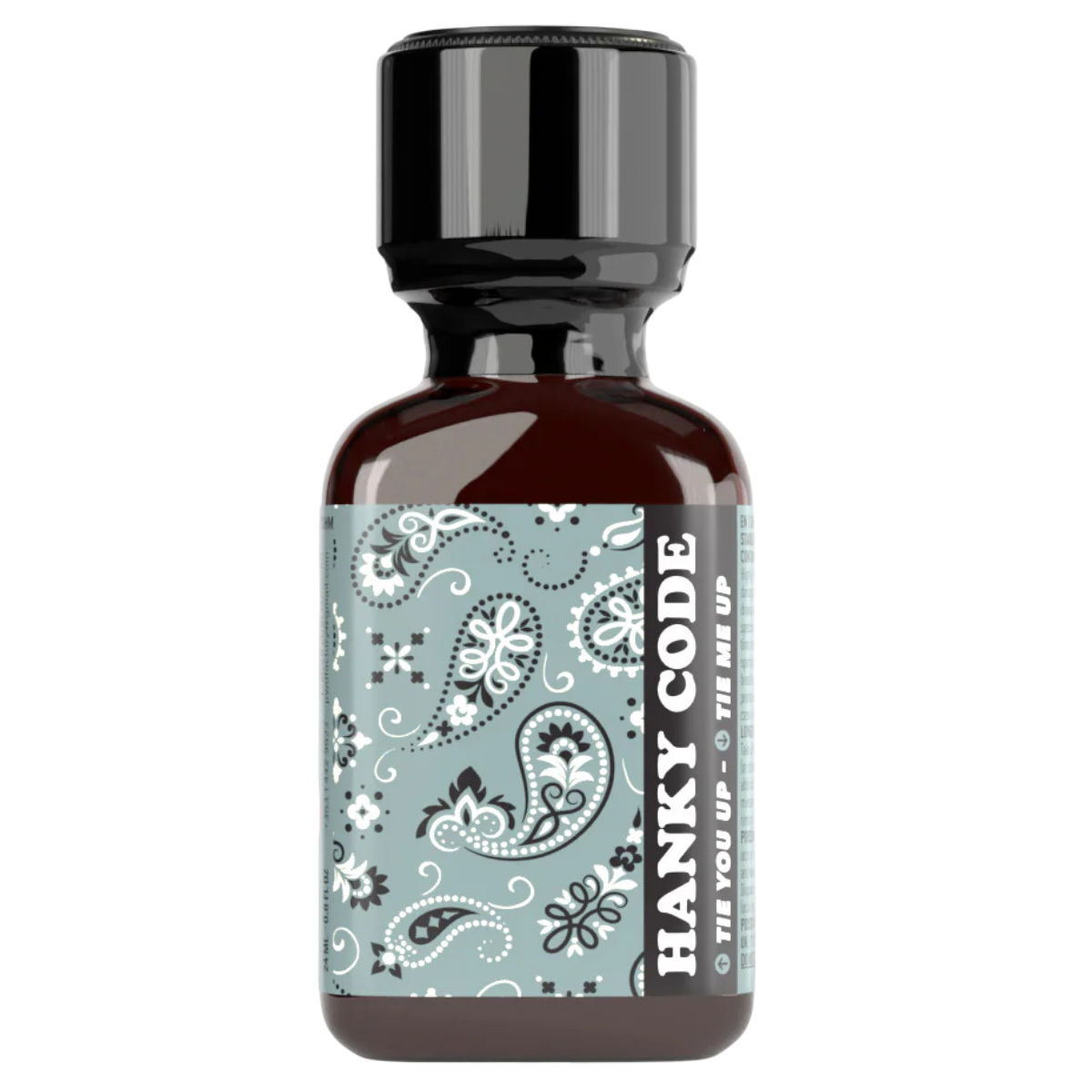
- Hanky Code: 5 colours (Blue, Grey, Yellow, Red, Black) – inspired by the hanky code tradition
- Brutus: Cinnamon Small, Leather & Wood Small/XL – scented aromas
- Others: PiG Xtra Strong (Limited Edition with PiG Berlin), Juic'd Maximum Impact XL, Booster Small, FFuck Force Premium, Folsom Fuel (Limited Edition), The Unbreakable Ultra Strong, Back Door Small
Which Ingredient Suits You?
Choosing an ingredient is personal. How an aroma is experienced depends on the individual, the situation and the setting. As a guide:
- Beginners: Propyl nitrite – fast, clear, short. Good for a first impression.
- Balanced: Pentyl nitrite – the all-rounder, described by most users as pleasant and versatile.
- Intense and long: Amyl nitrite – the classic for experienced users who prefer a slowly building, sustained experience.
- Strong: Butanol formulas – for users seeking a powerful, full experience.
If one ingredient does not suit you, try a different formula. The Lab Quality series offers all ingredients in consistent quality and two sizes – ideal for comparing formulas directly.
Safer Use – Responsible Handling of Aromas
Tom Rocket's values responsible use. Basic rules:
- Use in well-ventilated rooms
- Keep away from open flames and ignition sources
- Do not combine with erectile enhancement medication (PDE-5 inhibitors)
- Avoid skin contact with the liquid – rinse with cold water immediately if contact occurs
- Avoid eye contact – flush with plenty of water immediately and seek medical attention if needed
- Do not ingest
Possible side effects include headaches, dizziness, facial flushing and increased heart rate. These typically subside within a few minutes. If an aroma consistently causes unpleasant reactions, switch to a different ingredient.
Ordering, Shipping and Discretion
Tom Rocket's ships all aromas in discreet packaging via DHL within Germany and across Europe. No indication of the contents on the parcel. Payment via PayPal, credit card, Klarna or bank transfer. For private use only – commercial resale is not permitted.
Frequently Asked Questions
What is the difference between pentyl, amyl and propyl?
Pentyl nitrite offers a balanced experience and is the most common ingredient in the range. Propyl nitrite acts faster and more directly. Amyl nitrite builds more slowly but lasts longer. Each ingredient is experienced differently by each individual – trying them is the best approach.
Are amyl and butanol poppers legal in Germany?
Amyl and butanol are subject to specific legal regulations in Germany. Tom Rocket's ships these products in accordance with applicable rules. For details on current regulations, independent research is recommended.
Which poppers are suitable for beginners?
Propyl nitrite-based aromas such as Lab Quality Propyl or Rush Turbo Prop offer a fast, clear effect and are well suited for a first impression. Pentyl nitrite aromas are an equally tolerable alternative.
What are Poppers Sniffer Caps?
Sniffer Caps are attachments for poppers bottles that release the aroma in a controlled manner. Tom Rocket's offers the Poppers Duo Power Sniffer and Poppers Sniffer Caps in Small and Big. Compatible caps are listed in each product description.